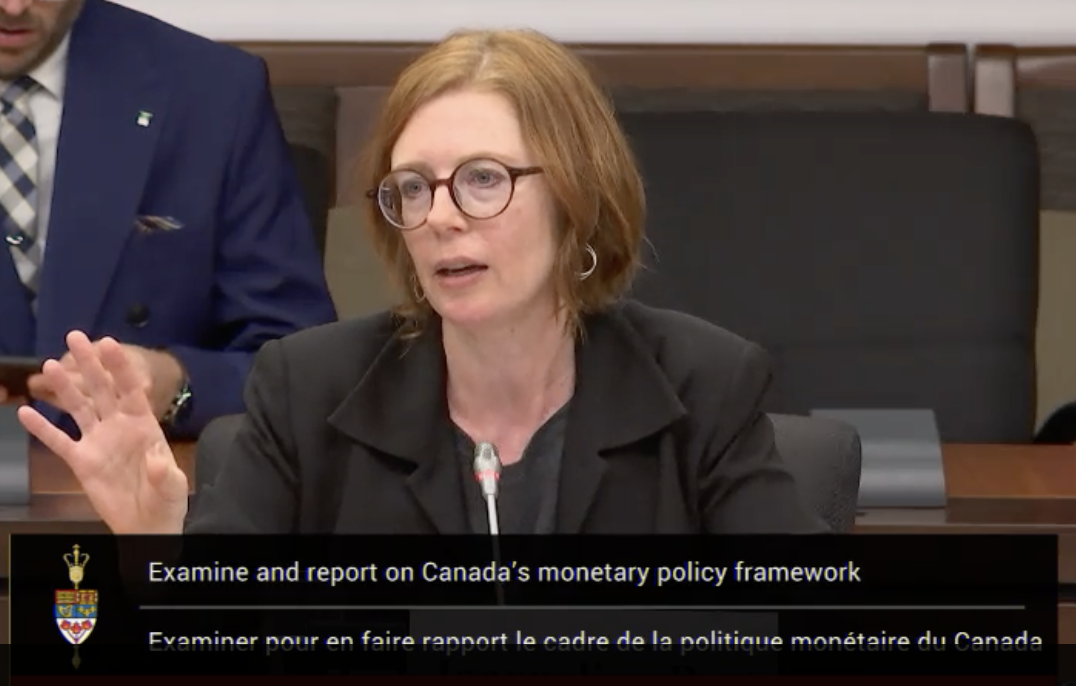
These were my opening remarks for my appearance before the Canadian Senate Committee on Banking, Commerce and the Economy on November 20, 2024:
J’aimerais commencer en vous remerciant de m’avoir offert la chance de témoigner dans le cadre de votre étude sur le cadre de politique monétaire du Canada.
Much of my research is on the history of monetary policy and financial governance in the US, UK and to a lesser extent, Canada. What that research has taught me is that we are no longer in the era of the Great Moderation: the label we give to the period of macro-economic stability that lasted from the 1990s through to the 2008 global financial crisis—an era defined by low inflation and relatively few economic crises. Unfortunately, our era has a lot more in common with the 1970s and 1980s, a time of instability and significant economic and political shocks.
It also seems very likely that we will continue to live in a highly uncertain global economic environment in the coming years, given the current trends in geopolitics and the impact of the climate crisis. This heightened uncertainty will require more creativity and discretion from economic policymakers, including central bankers. More discretion in turn requires more robust forms of political accountability.
The Bank of Canada has an excellent international reputation, which is well-deserved, and it punches above its weight in international policy circles. It has also deal effectively with some very significant shocks in the last few years.
However, there is still room to improve, as the Bank of Canada remains behind its peers in terms of international best practice.
In particular, there is room to improve on governance, on transparency and on its mandate.
I am happy to elaborate on these areas in our conversation today. For now, I will close by noting that reforms in these areas will provide the Bank of Canada with the accountability that it needs to sustain confidence and build trust as we negotiate the challenging times ahead.
As inflation finally drops below 2 per cent all eyes are on the Bank of Canada’s next interest rate decision on Wednesday, with markets predicting a half-percentage drop. Meanwhile, the U.S. Federal Reserve finally started bringing rates down in September after raising them 11 times since March of 2022.
Does this mean that central bankers are the superheroes who have saved the day yet again? Or are they the supervillains that their critics make them out to be, responsible for the inflation that has driven the recent cost of living crisis?
Both of these narratives make the same basic assumption: that central banks have huge influence, for good or ill, over the state of the economy.
But do they really? As we enter a new phase in the monetary policy cycle, it’s worth taking a closer look at what central banks’ role is – and what it could be.
It’s not at all clear that central banks were responsible for driving inflation up in the first place. And there is growing evidence that central banks have not affected inflation’s ups and downs anywhere near as much as they or their critics might like to claim.
A recent paper by French economist Olivier Blanchard and former Fed chair Ben Bernanke shows that most of the pressures driving post-pandemic inflation were linked to supply chain blockages, energy price shocks, and energy-related food price changes – none of which can be directly addressed through interest rates. While exceptionally low interest rates and quantitative easing – where the government buys up bonds on the open market to push rates down further – may have lasted longer than was prudent, they were not the main cause of post-pandemic inflation. The Bank of Canada is not the supervillain that its critics make it out to be.
More strikingly, it’s not clear that central banks’ policies played the primary role in taming pandemic-driven inflation. Most of the recent decrease in inflation can be attributed to the unwinding of temporary factors such as supply constraints and the shift in consumer demand from services to goods.
It’s true that inflationary expectations haven’t jumped the way that policymakers feared, but it’s not clear that this is because of the actions of central bankers (even if Fed Chairman Jerome Powell has been quick to take credit). Central banks are also not the superheroes of the economic story.
That doesn’t mean, of course, that the interest-rate hikes of the last two years didn’t have a major impact on our economy. Just ask anyone with a floating variable-rate mortgage, where payments have increased by an average of 49 per cent as of 2023, or those renewing in the next few years, who could alsoface a “payment shock,” as Canada’s banking regulatory, OSFI, noted in its last report.
If the Bank of Canada isn’t the superhero or supervillain, and yet its actions do significantly shape our lives, what should its role be?
The Bank of Canada can do more. Although central banks may not have saved the day this time, they do have tools they could use in this era of increasing uncertainty.
The Bank of Canada could take a more holistic approach to managing inflation by expanding its mandate to follow the U.S. Fed’s lead in formally taking employment into account, as Senator Diane Bellemare has proposed in Bill S-275. It could also take inspiration from the European Central Bank, which has developed innovative tools for making the financial system part of the solution in tackling climate change, instead of accelerating the crisis.
The Bank of Canada can also do less. Too often, politicians rely on central banks when the economy is in crisis, preferring to have unelected bankers make the tough decisions. We need to develop better co-ordination between fiscal and monetary policy and expand the economic toolkit so central banks aren’t our only go-to when we are confronted by a recession, a pandemic, a bout of unexpected inflation, or another financial crisis.
And the Bank of Canada can do better. Conservative Leader Pierre Poilievre’s threats to fire the Governor of the Bank of Canada were inflammatory and dangerous. The Bank of Canada is well respected at home and abroad. But that doesn’t mean that there’s no room for improvement. Central banks make decisions that affect millions of people: they need a governance structure that is open and accountable. The Bank of Canada is well behind its peer institutions in that regard, with interest rate decisions being made by internal consensus rather than through open deliberation.
We don’t need the Bank of Canada to be a superhero. We do need it to play a constructive, collaborative and innovative role in today’s economy.
This article first appeared in The Globe and Mail on October 22nd, 2024.
In the last few years, as central banks have begun to pay attention to climate change, there has been a flurry of academic interest in what central banks are doing and the potential this might hold for climate change action. Yet the crises of the last three years – COVID-19, the return of inflation, and the Russian invasion of Ukraine – have complicated the picture, leading us to look again at central banks and their potential role in climate governance and policy.
The promise of central banks taking a more active role in climate policy was raised by Mark Carney’s 2015 speech, ‘Breaking the tragedy of the horizon’, given while he was Governor of the Bank of England. Carney argued that central banks needed to become active in climate policy because of the threats climate change poses to financial stability, a core area of central bank responsibility. Given this, he argued that these risks – from the physical impacts of climate change, the reputational risks to banks investing in fossil fuels, and the risks to assets ‘stranded’ by climate change policies leading to decarbonisation – needed to be the focus of banking regulation and macroeconomic management.
In the following years, many central banks have introduced policies designed to take account of climate risks, introducing climate stress testing into their financial supervision, and creating the Network for Greening the Financial System, a global network of central banks. A handful of central banks have gone further, moving away from market neutrality in their own asset purchases and issuing green bonds to finance climate-friendly investment.
Many commentators have been optimistic about central banks’ new attention to climate change because of the particular power of central banks to regulate financial institutions, as well as their potential to create credit through their balance sheets. Their hope has been that this could be decisive in shifting investment away from fossil fuels and towards decarbonisation.
But at the same time, it is clear that the over-riding interest of central banks is in financial stability, and thus what has emerged are policies focused on minimising risks of bank failures, through for example stress-testing of banks to climate-related risks. Central banks are inherently conservative institutions, largely unsuited for a more activist role in shaping investment. And when they do, they mostly shape it conservatively, as in enabling fossil fuel assets to flourish in the aftermath of the COVID crisis, and often intensifying existing social inequalities. Perhaps the expectations of central bank climate activism are simply misplaced. Perhaps the most interesting institutional dynamics currently driving climate finance responses are occurring elsewhere—in new forms of ‘state capitalism’, for example, and the recent turn to industrial policy to drive investments in the climate transition.
Yet this story is itself somewhat limited and certainly Eurocentric. A recurrent theme in our conversations regarded the dangers in this story of focusing too much on Europe and North America. Outside that zone, China has taken the lead in more activist policies, pioneering many policies that have later been adopted and standardized by the EU and other western countries.
What effect might the return of inflation have had on this central bank activity on climate change? In most countries, securing price stability – keeping inflation within certain bounds – is the core responsibility of central banks. The period from the late 1980s and the 2008 global financial crisis is often labelled ‘the Great Moderation’, when macroeconomic conditions were remarkably stable and inflation was low. The rapid return of inflation since early 2021 raises the prospect not only of protracted instability and insecurity, but of distracting central banks from any climate activism they have entertained, worried about drifting too far from their core mandate.
But the return of inflation also brings with it the potential for a more fundamental rethinking: while some have invoked older explanations of inflation, centred on ‘wage-price spirals’, others like Isabel Schnabel of the ECB have pointed out that it is natural gas prices, both before and especially since the invasion of Ukraine, that are driving inflation across the economy. This ‘fossilflation’ implies that if governments and central banks want to return to stable and low inflation, then accelerating the shift away from fossil fuels is a key means to do this. Even before the rapid rise of natural gas prices from 2021 onwards, solar and wind were cheaper than gas in most places, so shifting to renewables would have significant effects on overall inflation levels.
Which of these framings will prevail among central bankers depends partly on questions of expertise. Which types of experts within central banks shape their overall approaches? How open are they to the new forms of thinking required to take climate change into account? There is evidence that over the last decade central bankers have been more reflexive about the limits of their models and assumptions—perhaps even shifting to a ‘technocratic keynesian’ paradigm. Yet many of their responses to the recent return of inflation have involved a return to orthodox economic thinking. These epistemic conflicts are in a state of flux and how they will play out is unclear.
Central banks traditionally are, at least in Europe and North America, relatively insulated from the day-to-day turbulence of political life. But both the current crises and the demands placed by climate action itself have generated very significant pressures on central bank independence. Banks have been put under considerable pressure by climate activists to shift investments away from fossil fuels, pressures which occasionally reach central bankers as bank regulators. Even some former central bankers openly consider the possibility of abandoning central bank independence, chiding other more conservative ones for regarding this as a catastrophe commensurate with the potential global devastation of unchecked climate change.
Underlying these specific questions are some much bigger systemic questions about the past and present trajectory of global capitalism and its complex historical relationship with climate change: is the global economy at an inflection point in those patterns with the return of inflation, or is it still defined by the problems of stagnation that have defined the years since the 2008 global financial crisis?
In sum, what our workshop decisively revealed was the indeterminacy of the present moment: while it is possible to trace future paths in which central banks could play a significant and constructive role in climate governance, there are equally many potential paths that would make them significant obstacles to the kind of profound political economic transformations needed to respond to the climate crisis.
With the Bank of Canada announcing an oversized interest rate hike this week, it might seem like central banks are coming to rescue us from inflation once again. Yet while they did play an important role in mitigating a COVID-induced recession, central banks don’t have the power to solve our inflation problem.
There’s no question that the inflation outlook today is worrying. With inflation hitting 5.7 per cent in March, we are facing a perfect storm of inflationary pressures from a combination of supply chain bottlenecks, pent-up demand and massive increases in energy prices from Russian sanctions.
As politicians start to make noise about inflation, we need to be careful not to accept the outdated assumption that central banks can control inflation by limiting the money supply.
Back in the late 1970s and early 1980s, Ronald Reagan and Margaret Thatcher capitalized on public anxiety around rising prices by bringing their conservative governments into power on the promise of getting tough on inflation using monetarism.
We should not be too surprised, then, to see the legacy of this outdated economic policy living on in members of the Conservative Party of Canada.
Poilievre has resurrected the age-old theory — let’s call it quack monetarism — that inflation is caused by too much money circulating in the economy and that the solution is to reduce the central bank’s money creation. Inflation has never only been about money; central banks can’t just wave a magic wand and get it down again.
The limits of monetary policy
While central banks do play an important part in getting inflation under control by setting interest rates, they don’t have all the tools needed to get inflation down this time around — particularly when some of the dynamics driving price increases will not respond to changes in interest rates.
As writer Adam Tooze points out, monetary policy can’t improve bottlenecks in the supply of microchips — which are driving car prices higher — or increase the supply of gas.
Even when monetary policy is effective in getting inflation down, there is always the risk of the central bank overshooting its aims and pushing the economy into a recession — as a growing number of policymakers worry may happen today.
Quack monetarism
So why do conservative politicians like Poilievre want us to believe we can solve this problem by getting the central bank to stop printing money? This is the kind of “zombie idea” that won’t die, in spite of being proven wrong, because its simplicity is so politically appealing.
This claim harks back to Milton Friedman’s famous dictum that inflation is “always and everywhere a monetary phenomenon.” The monetarist theory that Friedman advocated and which became very influential in the 1970s and early 1980s assumed the solution to inflation was to limit the expansion of the money supply.
What’s wrong with this idea? American banker Henry Wallich famously responded to Friedman’s statement by replying, “inflation is a monetary phenomenon in the same way that shooting someone is a ballistic phenomenon.” In other words, an excess of money may be partly to blame for inflation, but if you want to truly solve it, you need to understand the underlying causes of the problem.
Even if today’s inflation had similar causes to the 1970s, we don’t want to try monetarism again. Central banks in Canada, the United States and the United Kingdom all tried it in the late 1970s. By 1982 they had given up on it because monetarism simply did not work.
Most money is actually created by private banks and so attempts by the central bank to limit the money supply are doomed to failure. The bank can influence the demand for money by increasing or decreasing interest rates, but does not control the money supply itself.
Monetary policy is a blunt instrument
What finally did get inflation down in the 1980s was a combination of punishingly high interest rates — over 21 per cent in Canada — and the most painful recession since the Great Depression, with unemployment rising to 12.8 per cent in Canada. This is not an experience that we want to repeat.
If the economic trauma of 1970s and 1980s teaches us anything, it’s that monetary policy can be a very blunt instrument. To be truly effective, it must often be brutal.
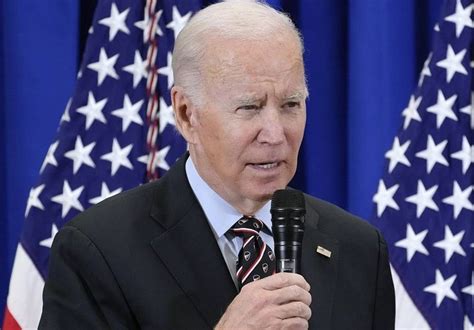
While there are no simple solutions to our current inflationary challenges, it’s clear we need a holistic approach. U.S. President Biden’s recent strategy provides one promising alternative. His goal is to tackle inflation by pressing companies to reduce costs, rather than wages, and by making prescription drugs, energy and childcare more affordable.
So the next time a politician tries to sell you on a quack monetarist remedy for our current inflationary woes, ask them if they’re willing to make us all pay the costs of another historic economic blunder.
This blog was first published on The Conversation on April 13, 2022.
Biden’s first 100 days clearly signals the end of the Third Way in economic and social policy. With massive investments proposed in social infrastructure and education, a willingness to take a positive sum approach to budget deficits, and a commitment to fund those investments partly through higher corporate taxes it’s clear that the Third Way is now truly dead.
For those who may not remember (or who have been all too happy to forget) the Third Way was a strategy cooked up by Centre-left parties in the 1990s who hoped to ride the coattails of a highly deregulated economy and booming stock market while also mitigating some of its damage through targeted social spending. It was called the “Third Way” because it sought to distance itself equally from conservatives and from social democrats. This was the policy style that defined Clinton’s “triangulation,” Tony Blair’s “New Labour,” and Jean Chrétien’s deficit-busting mantra.
The cost of these policy failures has become obvious in recent years, as we have witnessed the 2008 global financial crisis, growing inequality, and the rise of populist resentment—not to mention the discovery that cuts to the public health infrastructure may have trimmed a few government budgets over the year but at the cost of thousands upon thousands of lives (and a shuttered economy) today.
Although Joe Biden was a card-carrying member of the Third Way club in his earlier days, given the huge costs of these mistakes, it is little wonder that he has recognized that it is time for a different approach to the economy.
There are at least three key ways in which Biden’s economic policy breaks with the logic of the Third Way, each of which has important implications for Canadian economic policy.
First, Biden has proposed a massive increase in social spending. His Families Plan aims to invest $1.8 trillion over 10 years and includes support for free universal preschool, paid family and parental leave, investment in child care and education. As Adam Tooze has pointed out recently, the theme of investing in families is in fact central to all three of Biden’s major spending initiatives: the $1.9 trillion Rescue Plan, which has already been signed into law, included a significant, but temporary, family allowance system, while the $2.3 trillion Infrastructure and Jobs Plan includes major investments in elder care.
In a few short months, Biden has upended decades of doomed neoliberal efforts to economize on government spending by cutting social spending and offloading on women the cost of what feminist political economists call “social reproduction”—the work of raising children, keeping households going, and caring for the old and the ill—which the formal economy depends on to keep going.
Although women’s double burden helped families to eke out more from stagnant wages, it seriously affected women’s capacity to participate fully in the formal labour market. As Biden, Justin Trudeau and others from the Centre-left have finally recognized, the savings that deficit-busting governments gained from not investing in women and children was therefore always a false economy. As Quebec has made clear, affordable daycare more than pays for itself with the extra tax receipts earned when women are fully active in the workforce.
Second, Biden has finally given up on the Third Way faith in the virtues of balancing budgets and reducing debt. It was always particularly painful to watch Clinton and Obama Democrats, Chrétien Liberals and Blair’s Labour Party cut and cut and cut away all of the programs that they had once helped to create in the belief that this was the only way to get government back on solid fiscal ground. (Of course, Republicans from Reagan onward never believed in balancing their budgets, even as preached the virtues of the “Washington Consensus” on those in the Global South.)
It seems that Biden and his Treasury Secretary, Janet Yellen, like Trudeau and our Finance Minister, Chrystia Freeland, have finally recognized that the zero-sum logic of balanced budgets as an end in themselves is based on a fundamental fallacy. If a country cuts back too much on its spending in the name of austerity, it can create a downward spiral of less consumption, lower investment and increased unemployment, actually slowing the recovery (as we saw in Greece and the UK after the 2008 crisis). On the other hand, the build-up of careful, productively-invested debt can generate decades of growth that not only make a country wealthier but also ensure that the wealth benefits more of its population.
Finally, Biden has proposed that some of the additional spending should be paid for through higher taxes on the wealthy and on corporations. He seeks to double the tax on capital gains and raise corporate tax rates from 21% to 28%. This is a crucial shift after decades in which the Centre-left has gone along with the neoliberal myth that helping out investors and big corporations ultimately trickles down to the rest of us, while raising their taxes only hurts consumers. In fact, as the Tax Policy Centre notes, most corporate taxes in the US are paid for by investors—with 70% paid by the top 5% of income earners.
This is the one area where Biden is clearly ahead of the Trudeau Liberals in challenging the myths of the Third Way. There has been no sign of the current Canadian government wanting to reverse the Chrétien Liberals’ sharp reduction in the capital gains tax or to raise corporate taxes (which were also slashed under Chrétien, and then further cut by Harper). It appears that the Trudeau Liberals are not ready to discard their unhealthy relationship with big business and challenge the Third Way myth of corporate trickle-down.
Although it’s hard to say how much of this ambitious plan Biden will get through Congress, what is clear is that by challenging the damaging myths of the Third Way, Biden has shown that it is possible to imagine a more just economy, not just in the US but around the world.
This blog was originally published on the CIPS Blog, May 31, 2021.
The Bank of Canada, like central banks around the world, is currently facing enormous upheaval and uncertainty due to the enduring COVID-19 pandemic.
Will its leadership seize the moment as an opportunity to innovate and respond to the challenges ahead, including rising inequality and climate change? Or will it treat the present crisis as a temporary exception, hoping to return to business as usual once the pandemic recedes?
This spring, the bank released the results of its consultations with Canadians as part of its current mandate review. This is a historic opportunity for our central bank and the federal government to make the bank work better for the Canadian people.
As academics specializing respectively in philosophy and economics, and politics, we’d like to highlight two key themes that emerged in the Bank of Canada’s consultations with Canadians.
Wealth inequality, climate action
First, many Canadians are deeply concerned about the increasingly unequal distribution of wealth in this country — particularly by the way it has been driven by skyrocketing house prices. Second, some Canadians would like to see the Bank of Canada take the threat of climate change seriously as it plays its key role in ensuring price and financial stability.
How could the bank do better in tackling these two core problems — the scourge of rising inequality and the future shocks of climate change?
On inequality, there are many useful models around the world. Although Canadians like to think that we’re more progressive than our neighbour to the south, the United States is actually well ahead in rethinking the role of their central bank. Its recent shift towards what’s known as average inflation targeting, a strategy that seeks to balance inflation and growth over the medium term, gives it more flexibility to promote employment.
Such a strategy, potentially combined with a dual mandate of price stability and employment, would allow the Bank of Canada to pay more attention to the needs of all Canadians. The bank’s consultations with Canadians suggest that there is in fact considerable support for such a move.
While this would be a first and important step in modernizing the central bank’s mandate, we need to go further and take a more careful look at some of the unconventional policy tools that the central bank has been using in the last year.
Quantitative easing
Since the COVID-19 crisis took hold, the Bank of Canada joined other central banks in engaging in what’s called quantitative easing, initiating massive purchases of financial assets. As a result, its balance sheet has increased by close to 500 per cent since March 2020.
Such liquidity injections by central banks are clearly necessary. The question is how this liquidity should be injected.
Suppose your doctor prescribes you a drug that is known to have serious side effects. Wouldn’t you want her to look into alternative treatments? The experience with quantitative easing since 2008 shows that it has two serious side effects, both of which speak to some of the core concerns of Canadians.
First, it exacerbates inequality. While the central bank may want to see a good portion of the injected liquidity used to stimulate real economic activity, this is not something it can control. Instead, a lot of the liquidity has ended up in stock markets and housing markets, benefiting wealthy asset owners and helping to push the cost of owning a house beyond the means of many Canadians.
As Mark Carney, then governor of the Bank of England, acknowledged in 2014, “the distributional consequences of the response to the financial crisis have been significant.” The same is true today.
Second, when quantitative easing includes buying corporate bonds, it facilitates access to capital markets for the firms in question. Central banks appeal to the idea of “market neutrality” and claim that an asset purchase that reflects current bond volumes on capital markets does not favour anyone in particular. But in countries like Canada, when you buy a basket of corporate bonds proportional to the outstanding bonds on the market, you inevitably reinforce the status quo with its many companies that have large carbon footprints. That inevitably slows the transition to a more sustainable economy.
Politics comes with the territory
Some will caution that independent central banks should not get involved with such deeply political issues. The answer to this is simply: It’s too late for that. Political decisions come with the territory of central banking today, and we better develop innovative policy instruments to reflect this reality.
Other central banks are adapting already. In December, the Swiss National Bank announced that its asset purchases will exclude all companies primarily active in coal mining.
Perhaps more significantly, since Christine Lagarde has taken over as president of the European Central Bank, the institution has vowed to take a more active stance on climate change.
Unconventional policies can also be used to alleviate — instead of exacerbating — inequality. One idea is to transfer money to citizens through so-called helicopter money, rather than rely on institutional investors to translate quantitative easing measures into economic stimulus. The policy response to COVID-19 actually provides an interesting blueprint for this.
The overall tone of the Bank of Canada’s consultations report seems to suggest that the bank is more comfortable with the status quo than with serious innovation. Although this may sound very Canadian, our central bank actually has a history of being an innovator in monetary policy. It was among the first central banks to adopt monetarism in 1975, and the second to adopt inflation targeting in 1991 when it was still an untested approach. To confront today’s many challenges, the Bank of Canada needs to rediscover that innovative zeal.
This blog was originally published on The Conversation, May 4, 2021.
When confronted by the very difficult decisions created by the second wave of the COVID-19 pandemic, our political leaders have been seduced time and time again into a dangerous kind of wishful thinking. Instead of acting decisively to save lives, they have wavered and delayed—fiddling around with different colour-coded regional schemes, holding off on requiring masks, or reopening restaurants, bars and gyms in regions in regions where case counts were still rising.
What is it that political leaders treat as so important that they are willing to run this kind of risk with people’s lives? It’s the economy, of course.
And yet, this concept of “the economy,” which we are told to make so many sacrifices for, is actually a fiction – based on a series of longstanding narratives that must be challenged if we are to tackle the current crisis.
Probably the most pernicious fiction is the idea that the economy is so important that it trumps politics as usual, allowing the suspension of liberal democratic norms in the name of its survival.
This is an assumption that I’ve described elsewhere as a form of economic exceptionalism. We saw it over and over again in the aftermath of the 2008 financial crisis, when all sorts of exceptional measures were justified in the name of the survival of the economy: first bailout packages and then austerity measures were rushed through legislatures, while unelected central banks took on huge new powers—all in the name of responding to the economic emergency.
Decisions about how to respond to a crisis don’t affect everyone equally. Yet it is easier to talk about saving “the economy” than to explain why a government should help some folks (like those who benefited from the bailouts) rather than others (the ones who were asked to do the belt-tightening later).
Yes, major crises like wars, economic crises and pandemics justify some exceptional measures. But we should be very wary when our political leaders tell us that we must suspend our norms and make sacrifices for the sake of “the economy.”
This logic of sacrifice depends on another powerful fiction: the idea that a “sound economy” is some sort of abstraction that can be separated out from the lives of the people who make up that economy.
This is an idea that has risen and fallen in popularity over the centuries. It dominated economic thinking in the laissez faire nineteenth century, when the Global North relied on the gold standard to ensure “sound money” and free trade. Yet even as these politicians did whatever they could to protect the integrity of their own economies, they were also ruthlessly extracting resources from the Global South through colonialism. The term “free trade imperialism” nicely captures this hypocrisy – a term used by the British to justify their use of gunboats to force China to continue the opium trade.
The idea of the economy as an abstract thing began to fall out of favour during the Great Depression, when it became all too clear that efforts to protect a sound economy by imposing austerity only made things worse. After living through that terrible experience, politicians and economists alike recognized there is no such a thing as a “sound economy” apart from the men and women trying to find work to support their families. Their creation of the welfare state and policies like unemployment insurance, public education and health care were all based on their recognition of the importance of treating economic health holistically.
Yet, in the 1980s, as Margaret Thatcher told us that “there is no such thing as society,” we began to forget many of those lessons, and to treat the economy as a separate entity with the principle of “sound money” once again trumping employment as the dominant objective.
The final fiction that we’ve heard in the last months is the ill-fated idea that it’s possible to take a “balanced approach” to the pandemic response, as Alberta Premier Jason Kenny and Ontario Premier Doug Ford have both argued. Mr. Ford outlined his government’s version of this approach in a recent statement, in which he noted, “the number one priority is health and safety, and right beside that is the economy.”
At the core of this strategy is a false opposition between “health and safety” and “the economy” – as if it were possible to balance so many dollars in an economy on one side of the equation, and so many illnesses (and needless deaths) on the other.
Of course, as even the Ford and Kenney governments have finally begun to recognize with their latest U-turns, there is no trade-off between health and safety and the economy – particularly in the medium to long term. It is only by giving up on economic wishful thinking and taking decisive action to restrain the spread of the virus that we can ensure that we have a healthy population capable of rebuilding the economy in the months and years to come.
The economy is not a separate thing. Nor is it a god that must be placated through our sacrifices. It is us. Only us. And we must be healthy, safe, and supported by a capable government if we are to continue to thrive together.
A shorter version of this blog appeared in The Globe and Mail, November 29, 2020.
It’s not the kind of statement that comforts the faithful.
Dr. Theresa Tam, Canada’s Chief Public Health Officer, told a press conference last month that we are “steering in uncertain waters. No one knows exactly what is going to work, so there’s a grey zone and people are doing slightly different things.”
Although in more recent weeks, Tam has been a lot more definitive about the need for a strong and systematic response across the country, she and other public health officials and politicians are grappling with the challenge of acting decisively in spite of imperfect information as the scientific understanding of COVID-19 continues to evolve.
Tam’s nod to uncertainty might not be welcome by most Canadians grappling with the unfolding pandemic and the reality of lockdowns and red zones. Yet it speaks to a core challenge of our fractured politics: evidence-based policymaking must confront the varieties of our ignorance.
One of the bravest and most necessary things that policymakers such as Tam can do is acknowledge what they do not know. Too often, however, we have seen politicians mobilize ignorance for their troubling ends.
As a public, we demand that our political leaders and policymakers take definitive action based on expert advice. But what if knowledge does not hold the “master key”? What if an emerging feature of policymaking consists of expending considerable effort to mobilize ignorance and strategically position the art of unknowing? When all of our attention is focused on amassing knowledge or expanding the scope of the available evidence, we tend to lose sight of the need – the imperative in some cases – not to know.
In some cases, ignorance consists of actively denying or contesting knowledge and evidence in the public sphere. As sociologist Linsey McGoey argues in her book, The Unknowers, “knowing the least amount possible is often the most indispensable tool for managing risks and exonerating oneself from blame…” Think of the calculated efforts by leaders such as Jair Bolsonaro in Brazil and Donald Trump in the US to contest the science on social distancing and mask-wearing to combat the COVID-19 pandemic, not to mention their deliberate refusal to recognize the dangers associated with hydroxychloroquine.
Recent examples suggest that various forms of ignorance are far more central and useful to policymaking than we tend to assume. Climate change denial is a potent example of the political appeal and enormous danger of contesting widely accepted knowledge. Even then-U.S. Supreme Court nominee Amy Coney Barrett sidestepped the issue when asked by Senator Kamala Harris if climate change is occurring. “I will not answer that because it is contentious,” Barrett responded. Is that type of response a dog whistle for climate change deniers, such as President Trump, who blamed the California wildfires on forest mismanagement?
Ignorance comes in many varieties. It can take the less deliberate form of wishful thinking, as policymakers underestimate the very real possibility that their policies will have serious, unintended consequences. The last few months have revealed just how pervasive and powerful a hold this kind of wishful thinking can have on policymakers. For instance, Ontario Premier Doug Ford ignored Toronto’s Medical Officer of Health, who had urged his government to impose new restrictions in Toronto, only to backtrack a week later. And it was recently revealed that the Ford government rejected advice from their in-house experts when creating a new colour-coded plan for COVID restrictions.
These forms of willful and wishful ignorance can prevent political leaders from acting on some of the key problems facing our societies. Why, for instance, is Canada still lagging in terms of race-based data on the health inequities revealed by the COVID-19 pandemic? Although data alone cannot transform racist institutions or magically improve health outcomes for Canada’s most marginalized communities, the power to ignore data that connect the dots between racism and health outcomes can be a convenient cover for policy inaction. This “will to ignore” should be challenged vigorously by Canadians interested in equity and justice; equally important, however, knowledge about marginalized communities must be protected from forms of “algorithmic racism”.
The answer to this instrumentalization of ignorance, however, is not to pretend that we have all the answers. That kind of wishful thinking is also dangerous.
How do we govern in the face of uncertainty and ignorance? By walking a very fine line. Policymakers and experts must identify gaps in our knowledge and work to redress them. Citizens must uncover those instances when ignorance is mobilized as a cover for inaction. And all of us must acknowledge that there is still much that we don’t know.
Originally posted to the CIPS Blog November 18, 2020.
In the last few weeks, governments all over the world have been declaring states of emergency to deal with the coronavirus. Given the remarkable powers that governments at all levels have been acquiring through these measures, it’s not surprising then that both state leaders and commentators are talking about this moment being akin to a state of war.
Although this comparison is powerful—and in many ways correct—it only tells part of the story. Yes, governments are invoking emergency powers and imposing a state of exception of the kind that we usually see in wartime. Yet, if the goal is to save the lives of citizens against and attack, as it is during wartime, then why would government leaders like British Prime Minister, Boris Johnson, have delayed social distancing measures so long for fear of their economic consequences? And why does President Trump continue to flirt with the idea of opening the economy back quickly in some parts of the country in spite of the likely impact on the number of COVID-related deaths?
The answer to this puzzle lies in the fact that the kind of exceptionalist policies that we are seeing being put into place are, for some leaders at least, as much about protecting the economy as it they are about ensuring the public’s security.
Although we often forget it in calmer times (remember those?), liberal democratic governments do reserve for themselves the power impose a state of exception in times of crisis, such as a war. Such exceptionalist measures are designed to temporarily suspend normal liberal democratic rights and processes in order to respond to a supreme threat to the state and its people. The last time we saw this occurring on a broad basis was of course after 9/11, although many have also drawn parallels to the Second World War.
In many ways, the current emergency declarations and measures do bear important resemblances to these wartime measures. Governments have acted with extraordinary speed, rushing legislation through or using executive powers to give themselves the flexibility to act to fight the virus’ spread. They have partly sealed off their borders, turning inwards and actively seeking to manage the supply of essential medical equipment. We are also beginning to see the adoption of subtler, more technocratic measures that are closer to those we saw after 9/11, like the use of data surveillance in South Korea and other countries to map, track and control populations deemed a danger.
All of these exceptionalist measures suspend or constrain normal democratic processes and liberal civil rights in the same of the security of the state and its people.
Yet there are also several key ways in which the exceptional measures being proposed and introduced today are different from these war-time emergency policies. This time around, governments are simultaneously seeking to secure their population’s health against attack while also protecting their economy from ruin.
Governments have historically invoked states of exception not only to fight wars but also to tackle economic crises. Confronted by the ravages of the Great Depression, President Roosevelt famously argued in his inaugural address in 1933 that he was willing to use “broad Executive power to wage a war against the emergency, as great as the power that would be given to me if we were in fact invaded by a foreign foe.” During the 2008 global financial crisis, political and economic leaders again called for exceptionalist measures ranging from bailouts to stimulus measures in order to respond to what they described as an economic emergency.
This time around, governments are facing two existential threats at the same time—a public health threat to their citizen’s lives which can only be treated through a series of measures that themselves pose an existential threat to the economy. The Second World War’s mobilization of a wartime economy helped to rescue western states from the prolonged crisis of the Great Depression. This time around, mobilizing against the health threat means partly suspending the economy, not energizing it. These two sets of emergency responses are necessarily in tension with one another.
While political leaders’ willingness to sacrifice some individuals’ lives for the sake of the economy may strike us as a fresh horror, it actually has a long history. Over a decade ago, I wrote an article entitled “Why the Economy is Often the Exception to Politics as Usual,” in which I suggested that neoliberal international institutions, like the International Monetary Fund and the World Bank, had proven willing to suspend the political rights and freedoms of the citizens of poorer countries in the name of re-establishing a sound economy. In these countries, the supreme goal of economic stability, not political security, was treated as a sufficient ground for exceptionalist measures, even if the consequences were often extreme poverty and deprivation—and yes, very likely, death—or some.
In the Global North, while we remain on average the lucky ones, these recent twin crises have revealed just how vulnerable we have made some of our population in our pursuit of a mythic “sound economy”— including those in the gig economy, without secure employment, and working in essential but unrecognized jobs. These crises have also shown just how willing some political leaders are to require the ultimate sacrifice of some of our citizens in the name of that same “sound economy.”
Responding to these twin public health and economic crises, while also ensuring that we come out the end of this process in something that still resembles a democracy, will not be easy. What’s clear, however, is that those who insist that that the economy’s survival trumps the right of its people to life are mobilizing a particularly vicious form of economic exceptionalism—one that must be recognized and resisted.
This post was originally published on theSPERI blogon April 17, 2020.
How do we act effectively when there is so much that we simply do not know about what lies ahead? This is the challenge that policymakers face today on two very different fronts: public health and the economy. There is so much that public health officials don’t yet know about COVID-19, but they have to act nonetheless. As the current economic crisis deepens, economic policymakers must also take steps while facing huge uncertainty about what the consequences will be.
While this double dilemma is alarming, the comparison between these two challenges is also instructive.
I spend a lot of my time studying how economic ideas and expertise work, particularly in the context of crises. As I have been watching the current public health crisis unfold, day by day and hour by hour, I have been struck by the parallels and differences in how economic and public health policymakers deal with what they know and, more importantly, what they don’t know.
It turns out that there are some common takeaways for how to develop policy—and communicate about it—in the context of extreme uncertainty.
1. Wishful thinking and denial are dangerous
In both public health and economic cases, we can see the both the temptation and the danger of engaging in wishful thinking and denial. Although Donald Trump is the most obvious and egregious example of this kind of willful ignorance, he is not alone. Just look at the UK government’s extremely optimistic (but short-lived) embrace of the theory of “herd immunity” as a way of coping with the pandemic without having to pay the social and economic cost of social distancing.
Economic policymakers aren’t immune either to the temptations of willful ignorance. We also saw a lot of wishful thinking and denial about the huge economic risks being taken in the early 2000s, which led to under-regulation and helped precipitate the 2008 financial crisis. Today, we need our policymakers to avoid wishful thinking about how bad things could easily get, and take dramatic and decisive steps to support the economy.
2. Policymakers need to find ways of admitting what they don’t know
If you pay attention to reputable news outlets and the quickly growing number of scientific papers being published on COVID-19, what you discover is a frank and evolving discussion of what is and isn’t known about the virus and the best way to respond. News sites provide updates on both what we do know so far and what we don’t know yet. In a public health crisis, scientists and policymakers alike are willing to both admit their ignorance and build it into their response.
When it comes to economic crises, things tend to work differently. Most economists have very definite ideas about how the economy works and how to fix it when it’s ailing. In recent decades, many economists have become convinced that the way to make the economy work best is imposing simple rules—monetary rules for central banks and fiscal rules for government. Added to that is the belief that for a policy to work it must be credible—which means sticking to your guns in following the rules, come what may.
Of course, during the 2008 economic crisis, policymakers were forced to break the rules in their response. Even the most orthodox of economists (usually) become pragmatists in a crisis. Yet within a couple of years, policymakers treated this response as an exception and have sought to return to “normal” ever since then (good luck with that).
In theory, a central banker or finance minister isn’t allowed to say “I don’t know” for fear of markets’ panicked reaction. Yet, in practice, central bankers like our own Governor, Stephen Poloz, have admitted (long before this current crisis) that they are often confronted by extreme uncertainty. We need economic policymakers to take a page from the world of public health and find better ways of communicating both what they know and what they don’t know today.
3. We need a flexible and contextual response
Much contemporary economic thinking assumes that the basic rules governing economic behaviour never change. This is a recipe for rigidity, not resilience. It ignores the fact economic dynamics are always social and historical. They depend on how people act, which changes over time. What works in response to one crisis, or in one national context, may not work in another.
In the public health debate there is a much greater awareness of the fact that the effectiveness of a given policy response depends on how people respond. Because the coronavirus’s spread and mortality rate also depend partly on how we react to it, answers to key questions about how to respond have to be contextual and evolving.
Although it’s scary to admit our ignorance, it also turns out that it’s vital—whether we’re talking about the novel coronavirus or its effects on our economy today.
This post was original published on theCIPS Blogon March 25, 2020.




 jacquelinebest.com